1

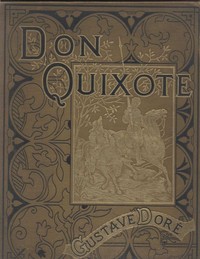
The History of Don Quixote, Volume 1, Part 06 — Key Ideas to Explore
(0 User reviews)
71
Project Gutenberg
2004
Not confirmed
Spain -- Social life and customs -- 16th century -- Fiction; Knights and knighthood -- Spain -- Fiction; Picaresque literature; Romances
Readers of public-domain and historical texts
Project Gutenberg digital edition
en
Edition facts
Words
9,832
Reading time
43 min
Text sections
2
For The History of Don Quixote, Volume 1, Part 06 — Key Ideas to Explore, the stored edition analysis reports 9,832 words, 43 min estimated reading time, and 2 detected text sections.
The text analysis averages about 36.8 words per sentence, while the detected sections provide another way to judge how the source is divided.
Project Gutenberg metadata also associates the work with “Spain -- Social life and customs -- 16th century -- Fiction,” connecting these edition facts with the source record’s subject description.
Source:
Project Gutenberg record #5908
Cervantes' wordplay and physical comedy in Chapters 16-17 of Don Quixote, where the inn becomes a castle and the balsam of Fierabras backfires on Sancho.
Read the complete public-domain text at its original source.
Read on Project GutenbergCervantes builds the inn-as-castle conceit through precise, comic detail. The innkeeper's wife is notably kind-hearted, a departure from type, while the Asturian servant is described with unflattering specificity: broad face, snub nose, and a shape that makes her contemplate the ground. Don Quixote's bed, four rough boards on uneven trestles with a thin, pellet-filled mattress, is contrasted with the carrier's pack-saddle bed, which has much the advantage. These concrete observations ground the fantasy in tangible reality.
The Balsam of Fierabras: A Recipe in Action
Don Quixote's concoction of the balsam of Fierabras is a set piece of mock-heroic ritual. He recites more than eighty paternosters and as many ave-marias, salves, and credos over a tin oil-flask, accompanying each word with a cross. The absurd precision—the number of prayers, the improvised container—underscores the gap between his chivalric delusion and the mundane setting. When he drinks nearly a quart, the result is immediate vomiting, profuse sweat, and a three-hour sleep. He wakes feeling cured, convinced of the balsam's virtue. Sancho, however, fares worse: his stomach, less delicate, produces violent gripings and retchings, and he curses the balsam and the thief who gave it to him. Cervantes uses the same event to expose the master's self-deception and the squire's bodily suffering.
Sancho's Body as Comic Counterpoint
Sancho's physical ordeal is described with clinical relish. After drinking the balsam, he begins to discharge both ways, ruining the rush mat and canvas blanket. His paroxysms and convulsions last two hours, leaving him so weak he cannot stand. Don Quixote, by contrast, feels relieved and eager to depart. The asymmetry is deliberate: the knight's delusion grants him resilience, while the squire's realism makes him vulnerable. Cervantes also plays with the logic of knighthood: Don Quixote blames the balsam's failure on Sancho not being dubbed a knight, a circular argument that Sancho bitterly rejects. The scene balances slapstick with a subtle critique of the chivalric code's exclusivity.
The Inn as a Stage for Social Observation
The inn's inhabitants form a small society. The innkeeper's daughter, a comely girl, helps tend Don Quixote, while the Asturian lass—blind in one eye, not sound in the other—assists. The carrier, peacefully attending to his mules, is indifferent to the chaos. More than twenty people watch Don Quixote's departure. Cervantes uses the inn's confined space to juxtapose multiple perspectives: the innkeeper's practical questions, the daughter's silent observation, the crowd's amused gaze. Don Quixote's sighs, interpreted as pain from his ribs, are actually directed at the daughter, but no one perceives his chivalric intent. The scene demonstrates how Cervantes layers subjective reality within a shared physical space.
Diction and the Gap Between Ideal and Real
Cervantes' diction consistently undercuts heroic language. Don Quixote's bed is described as consisting of four rough boards on two not very even trestles, with a mattress that for thinness might have passed for a quilt, full of pellets. The balsam is boiled in a pigskin, then decanted into a tin oil-flask. The Asturian lass's elegance of shape is immediately qualified by her defects. These details are not merely comic; they establish a linguistic tension between how Don Quixote perceives the world and how the narrator describes it. The narrator's voice remains detached, precise, and slightly ironic, never endorsing the knight's interpretations. This gap is the engine of the novel's humor and its philosophical inquiry into perception and reality.
Readers attentive to Cervantes' word choices will notice how the narrator's plain descriptions consistently undermine Don Quixote's elevated language. The balsam episode, in particular, rewards close reading of its ritualistic details and their bathetic outcomes. This portion of the novel shows Cervantes refining his technique of using physical comedy to probe the boundaries between delusion and truth.
Years of shelving these volumes taught me that Don Quixote's inn-yard miseries—Sancho retching over that wretched balsam—are not cruelty but kinship. The same fond, wobbly humanness glows in Man Overboard! — Reading Companion, where drowning is a metaphor for that same blessed, ridiculous stumble. Both books whisper: we were never meant to be graceful, only honest.
There are no reviews for this eBook.
There are no comments for this eBook.
Reader reflection
What did you think of this book?
Answer a few questions and save a private reflection on this device.
Your progress
0
/
10
2
Did this book hold your interest?
3
Is this a title you would suggest to others?
4
What was the reading difficulty like?
5
Did the book give you something worth debating?
6
How understandable was the text?
7
How distinctive were its ideas or approach?
8
Which part made the strongest impression?
9
What did this book teach you most?
10