1

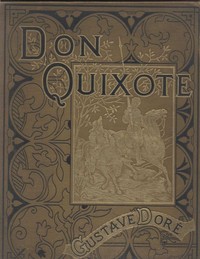
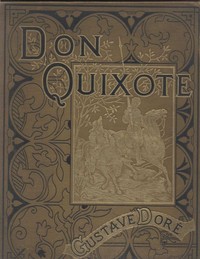
The History of Don Quixote, Volume 1, Part 02 — Story, Setting & Ideas
(0 User reviews)
2472
Project Gutenberg
2004
Not confirmed
Spain -- Social life and customs -- 16th century -- Fiction; Knights and knighthood -- Spain -- Fiction; Picaresque literature; Romances
Readers of public-domain and historical texts
Project Gutenberg digital edition
en
Edition facts
Words
7,619
Reading time
34 min
Text sections
1
The History of Don Quixote, Volume 1, Part 02 — Story, Setting & Ideas can be approached with a clearer sense of reading commitment from its source measurements: 7,619 words, 34 min estimated reading time, and 1 detected text section.
The text analysis averages about 33.6 words per sentence, while the detected sections provide another way to judge how the source is divided.
Project Gutenberg metadata also associates the work with “Spain -- Social life and customs -- 16th century -- Fiction,” connecting these edition facts with the source record’s subject description.
Source:
Project Gutenberg record #5904
This editorial note examines how the opening, middle, and later excerpts of Volume 1, Part 2 of Don Quixote guide a first reading, focusing on the knight's self-coronation, his intervention with Andrés, and the domestic reaction to his absence.
Read the complete public-domain text at its original source.
Read on Project GutenbergDon Quixote leaves the inn "so happy, so gay, so exhilarated at finding himself now dubbed a knight, that his joy was like to burst his horse-girths." The narrator immediately undercuts this triumph: the joy is comically physical, threatening to burst the tack. The knight then hears cries from a thicket and interprets them as a call to adventure, but the reader soon discovers a farmer flogging a boy. This pattern—grand expectation meeting mundane reality—is established within the first pages.
The Knight's Self-Coronation and Its Immediate Consequences
The opening excerpt shows Don Quixote newly knighted, yet his first act is to head home for money and a squire. His horse Rocinante, "reminded of his old quarters, stepped out so briskly that he hardly seemed to tread the earth." The horse's eagerness mirrors the knight's, but the destination is prosaic. The cries from the wood interrupt this homeward journey, and Quixote's response is formulaic: he thanks heaven for an opportunity to fulfill his obligation. The language is chivalric, but the situation is a brutal farmyard beating. The knight's intervention—ordering the farmer to stop and pay the boy—shows his adherence to a code that has no power here. The farmer, once Quixote leaves, resumes the beating with renewed vigor. The episode ends with the boy worse off, a clear gap between intention and outcome.
The Farmer's Flogging and the Boy's Fate
The middle excerpt details the encounter with Andrés, the boy tied to an oak and flogged. The farmer's commands—"Your mouth shut and your eyes open!"—are the voice of practical cruelty. Don Quixote's harangue invokes "Senor Don Rodrigo de Narvaez" and "the lovely Dulcinea del Toboso," but the farmer, Pedro Alonso, sees only his neighbour. The knight's insistence that he knows who he is—"I may be not only those I have named, but all the Twelve Peers of France"—reveals a mind that has replaced identity with literary roles. The boy's fate is sealed by Quixote's departure; the farmer beats him "so that he left him half dead." The episode underscores the danger of applying chivalric logic to a world that operates on different rules.
Domestic Alarm and the Housekeeper's Lament
The later excerpt shifts to Don Quixote's home, where the housekeeper and niece voice their fears. The housekeeper's speech is a catalogue of symptoms: "it is three days now since anything has been seen of him, or the hack, or the buckler, lance, or armour." She blames "accursed books of chivalry" for upsetting his reason. The niece adds detail: her uncle would stay up reading, then "fling the book away and snatch up his sword and fall to slashing the walls." The sweat from exhaustion he called "the blood of the wounds he had received in battle." These domestic witnesses provide a counterpoint to Quixote's self-image. The curate and barber, hearing the peasant's report, recognize the madness. The scene ends with Quixote being carried to bed, still insisting on the wise Urganda to cure him.
The Return Home and the Unraveling of the Knight's World
The final excerpt shows the peasant bringing Quixote home at nightfall, waiting until dark to avoid public shame. The house is "all in confusion," and the curate and barber are present. The peasant's call—"Open, your worships, to Senor Baldwin and to Senor the Marquis of Mantua"—echoes Quixote's own language, but the response is practical: they recognize their friend and carry him to bed. The knight's last words in this part are a request for "the wise Urganda," a figure from chivalric romance. The contrast between the domestic chaos and Quixote's continued delusion is stark. The curate's promise to burn the books foreshadows the famous scrutiny of the library in later chapters. This part ends with the knight physically broken but mentally unchanged.
These excerpts reveal a structure of escalating consequences: the knight's self-appointment leads to a failed rescue, which leads to a return home where his madness is diagnosed by those who know him best. The reader is positioned to see both the comedy of Quixote's misreadings and the real harm they cause. Pay attention to how the narrator balances sympathy with irony, and how the domestic voices ground the story in a recognizable world.
Reading how the household crumbles without Quixote’s familiar madness reminded me of quieter voids. There’s a loneliness in domestic order when the disruptive spirit departs. I thought of Toppleton's Client; Or, A Spirit in Exile — Reading Notes, where exile takes a stranger shape. Both books linger in that strange hush after chaos leaves a room.
There are no reviews for this eBook.
There are no comments for this eBook.
Reader reflection
How did this book work for you?
Your answers remain private and are stored only in this browser.
Your progress
0
/
10
2
What was your overall reaction to the book?
3
Would you encourage someone else to read it?
4
How easy was the book to follow?
5
Which part made the strongest impression?
6
Could you follow the author’s main argument?
7
Would you read this book again?
8
Would you like to discuss this book with someone?
9
What changed or sharpened your thinking?
10