1

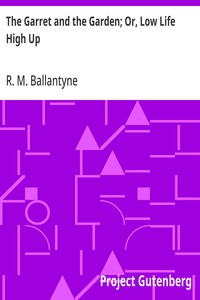
The Garret and the Garden; Or, Low Life High Up — Story, Setting & Ideas
(0 User reviews)
94
Project Gutenberg
2007
Not confirmed
Detective and mystery stories; False imprisonment -- Fiction; London (England) -- Social conditions -- 19th century -- Fiction
Readers of public-domain and historical texts
Project Gutenberg digital edition
en
Edition facts
Words
35,713
Reading time
156 min
Text sections
4
The Garret and the Garden; Or, Low Life High Up — Story, Setting & Ideas can be approached with a clearer sense of reading commitment from its source measurements: 35,713 words, 2 hr 36 min estimated reading time, and 4 detected text sections.
The text analysis averages about 20.1 words per sentence, while the detected sections provide another way to judge how the source is divided.
Project Gutenberg metadata also associates the work with “Detective and mystery stories,” connecting these edition facts with the source record’s subject description.
Source:
Project Gutenberg record #21737
Ballantyne's novel pairs a sailor and a street boy in London's slums, using dialect, eavesdropping, and ironic contrasts between garret and garden to explore class and morality.
Read the complete public-domain text at its original source.
Read on Project GutenbergThe novel opens with a bronzed seaman rolling into a shabby court on the Surrey side of the Thames, where he is hailed by a boy perched at a window. Their exchange—'wrong port' met with 'no grog-shop'—establishes a quick, bantering friendship built on nautical and streetwise slang. Ballantyne’s narrator describes the boy’s face as bearing 'fun, mischief, intelligence, precocity' alongside 'suffering,' a compression of character that sets the tone for a story where low life and high principles collide.
Dialect as a Marker of Character and Class
Ballantyne renders the speech of his London street characters with careful orthography: 'W’ich I didn’t say you ’ad,' 'a wariety o’ names,' 'keemodity.' The boy’s dialect is not merely decorative; it signals his sharpness and survival instincts. The sailor, too, uses nautical metaphors—'beatin’ about—off an’ on'—that mark him as an outsider to the city. Their mutual understanding across class lines is forged through this verbal play. The narrator’s own voice remains standard, creating a distance that lets the reader observe the characters’ linguistic agility without condescension.
Eavesdropping and the Unreliable Ear
A key plot mechanism is overheard conversation. In a gin-palace, the dissolute Trumps, lying under a seat, catches the name 'Laidlaw' and a fragment about 'put the 50 pound note in his bag.' The scene is deliberately tantalising: Ballantyne notes that Trumps 'could not gather the gist' and that the plotters spoke in low tones. The reader shares his partial knowledge. This technique builds suspense while reminding us that eavesdropping yields only fragments, not truth. The kick in the ribs and feigned snore add a physical, almost theatrical layer to the deception.
The Garret and the Garden as Moral Geography
The title’s opposition structures the novel’s moral landscape. The 'garden'—a domestic space tended by Susy and the old woman—offers comfort and reform. The 'garret' suggests poverty and confinement. Ballantyne uses setting to mirror character: the boy Tommy Splint roves between these poles, 'sometimes howling in at open doors' and 'whistling with irritating intensity.' His arab spirit is tempered by the garden’s influence, yet the city’s low life—gin-palaces, drunken men, plotting lawyers—constantly pulls him back. The physical journey between garret and garden becomes a moral one.
Irony and the Narrator’s Wry Commentary
Ballantyne’s narrator often undercuts the action with dry asides. Tommy is described as a 'jovial lion-cub seeking whom he might terrify,' a biblical echo that mocks his petty mischief. The drunk Trumps is 'pale, worn-out, cadaverous, threadbare, inexpressibly mean'—a catalogue that piles on adjectives until the description becomes almost comic. This ironic distance prevents the melodrama from becoming maudlin. The narrator invites us to see the absurdity in the characters’ schemes while still caring about their fates.
Ballantyne’s novel rewards attention to its verbal texture and structural symmetries. The dialect is not a barrier but a key to character; the eavesdropping scenes are puzzles the reader must piece together. As you read, note how the garret and garden shift in meaning—sometimes literal places, sometimes states of mind. The story moves quickly, but its best pleasures lie in the details of voice and setting.
Reading about the sailor and the street boy, I remembered crouching behind my grandmother’s armchair, listening to the grown-ups argue about money. That same hush—like secrets in a garret—crept over me again with The Second Jungle Book — Inside the Classic, where the wildness felt less like adventure and more like watching someone learn who they truly are. Both books made me feel unseen, yet somehow understood.
There are no reviews for this eBook.
There are no comments for this eBook.
Reader reflection
Record your reading impressions
A brief reflection can help important ideas stay with you longer.
Your progress
0
/
10
2
What was your overall reaction to the book?
3
Would you pass this book on to a friend?
4
Did the language feel accessible?
5
How original did the book feel?
6
How useful did the reading feel?
7
Did you relate to its people, ideas, or situations?
8
How strongly did the book affect you emotionally?
9
In one sentence, what did you learn?
10