1

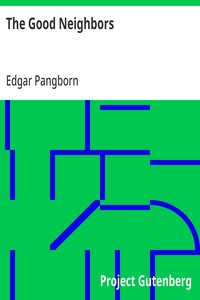
The Good Neighbors — Reading Notes
(0 User reviews)
1074
Project Gutenberg
2008
Not confirmed
Science fiction; Short stories; Human-alien encounters -- Fiction
Readers of public-domain and historical texts
Project Gutenberg digital edition
en
Edition facts
Words
5,051
Reading time
22 min
Text sections
1
This digital edition of The Good Neighbors — Reading Notes is described by source-level measurements including 5,051 words, 22 min estimated reading time, and 1 detected text section.
The text analysis averages about 21.0 words per sentence, while the detected sections provide another way to judge how the source is divided.
Project Gutenberg metadata also associates the work with “Science fiction,” connecting these edition facts with the source record’s subject description.
Source:
Project Gutenberg record #26536
Edgar Pangborn's 1960 story opens with a vast alien ship and a mile-wide flying creature, then shifts to a sardonic human narrator. The excerpts show a blend of cosmic scale and domestic irony, with precise observations about the creature's behavior and the public's distracted response.
Read the complete public-domain text at its original source.
Read on Project GutenbergEdgar Pangborn's "The Good Neighbors" begins not with a close encounter but with a statistical report: a spherical ship twenty-seven miles in diameter is sighted briefly, and no one observes the escape from it. The narrative voice is dry, almost bureaucratic, as it notes that at "the tattered end of the 20th century," one more visiting spaceship barely registers against the distractions of 3-D television and a hot summer. This tone of weary irony sets the stage for the arrival of a creature that is less an invader than a problem of logistics.
A Creature of Scale and Silence
The first excerpt introduces the alien not as a character but as a phenomenon: an animal resembling "an inflated gas-bag with wings," with a wingspan over four miles. Pangborn grounds the fantastic in concrete detail—the creature generates thunder without lightning, drifts over Seattle, and forces a military rethink because shooting it would drop four miles of carcass on a city. The prose shifts between clinical observation (radar goes crazy for an hour) and wry understatement ("it's not nice for the city"). The creature is female, referred to as "she," and her movements are described in terms of weather: she climbs on updrafts, follows the Platte and Missouri, and circles St. Louis "hopelessly crying." This is not a monster to be fought but a natural force to be managed.
The Human Response: Bureaucracy and Distraction
The opening pages establish a world where the extraordinary is met with mundane reactions. The Office of Continental Defense "deplored the lack of precedent." The public is more interested in 3-D TV and the Grandson of Tarzan. This contrast between cosmic event and human triviality is a recurring note. The narrator's voice is sardonic, as when noting that someone in charge "must have had a grain of sense" to cancel the shoot order. The story's title, "The Good Neighbors," hints at irony: these aliens are not hostile but inconvenient, and the human response is a mix of caution and indifference. The excerpts suggest the narrative will explore how a society accustomed to spectacle handles a genuine anomaly.
Voice and Structure: The Unreliable Observer
The narrative is told from a limited, unnamed perspective that pieces together events from reports and observations. Phrases like "the first knowledge of the escape came when" and "there was no means of calculating" create a sense of secondhand knowledge. The story does not follow a single protagonist but rather the collective reaction. This structural choice emphasizes the alien as a shared problem rather than a personal encounter. The prose is precise about scale—"a short neck not more than three hundred feet in length"—but deliberately vague about the creature's interiority. The reader is left to infer the creature's distress from its actions: climbing, circling, crying. This restraint builds tension without anthropomorphizing.
Setting as Character: The Tattered End of a Century
The story is set in a near-future that feels like an extension of 1960: 3-D TV is emerging, the Cold War is implied by the military readiness, and the public is jaded. The setting is sketched through small details—a hot summer, the Pacific coast, the Rockies, St. Louis—rather than expounded. This grounding in recognizable geography makes the alien's flight path feel real. The creature's journey from Seattle to St. Louis traces a route across the American heartland, turning the continent into a stage for a slow-motion crisis. The excerpts do not reveal the story's resolution, but they establish a world where the extraordinary is met with a shrug and a calculation of risk.
The Art of the Opening: Establishing Tone and Scale
The opening paragraph of "The Good Neighbors" is a masterclass in understated world-building. It begins with the ship's dimensions and orbit, then immediately undercuts the wonder with a throwaway line about the public's indifference. This juxtaposition of scale and apathy defines the story's tone. The creature's introduction—via an eclipse that is not an eclipse—is poetic but precise. The narrative voice remains detached, almost reportorial, even when describing the creature's cries. This voice invites the reader to observe alongside the narrator, to piece together the meaning of events without being told what to feel. The excerpts suggest a story that values implication over explanation.
As you read "The Good Neighbors," pay attention to what the narrator chooses to report and what is left unsaid. The gaps—the creature's origin, the contents of the ship, the fate of the escapees—are as important as the details. Pangborn trusts the reader to infer the emotional weight from the creature's behavior and the humans' reactions. The story is short, but its resonance depends on noticing the small, telling observations: the "hopelessly crying" circling, the "grain of sense" in a military order, the public's preference for entertainment over wonder.
That rainy afternoon, Pangborn’s mile-wide creature wheeled above a world too busy to notice, and I kept thinking how we bury the enormous under the trivial. Later, sheltering from the downpour in a friend’s porch, I picked up The Expedition of Humphry Clinker — Edition Insights—smelling of old paper—and found the same strange patience: colossal journeys narrated through squabbles and postscripts. One book led to another without a sound.
There are no reviews for this eBook.
There are no comments for this eBook.
Reader reflection
What was your reading experience?
Capture what you thought, learned, and would like to remember.
Your progress
0
/
10
2
What was your overall reaction to the book?
3
Would you pass this book on to a friend?
4
How much effort did this book require?
5
Did it raise ideas you would like to talk about?
6
Did this book create an emotional response?
7
How distinctive were its ideas or approach?
8
How did the reading compare with what you expected?
9
What changed or sharpened your thinking?
10