1

Waverley; or, 'Tis sixty years since — Complete — Key Ideas to Explore
(0 User reviews)
441
Project Gutenberg
2004
Not confirmed
Historical fiction; Scotland -- History -- 18th century -- Fiction; Jacobite Rebellion, 1745-1746 -- Fiction
Readers of public-domain and historical texts
Project Gutenberg digital edition
en
Edition facts
Words
210,175
Reading time
914 min
Text sections
23
Waverley; or, 'Tis sixty years since — Complete — Key Ideas to Explore can be approached with a clearer sense of reading commitment from its source measurements: 210,175 words, 15 hr 14 min estimated reading time, and 23 detected text sections.
The text analysis averages about 28.6 words per sentence, while the detected sections provide another way to judge how the source is divided.
Project Gutenberg metadata also associates the work with “Historical fiction,” connecting these edition facts with the source record’s subject description.
Source:
Project Gutenberg record #4966
Scott's first novel embeds a Jacobite rebellion within a romance of divided loyalties, but the excerpts reveal a medieval subplot with knights, a forester, and a lady in distress, complicating the catalog's historical-fiction label.
Read the complete public-domain text at its original source.
Read on Project GutenbergThe excerpts from Waverley present a curious mismatch with its catalog subjects. While the record promises a Scottish Jacobite novel set in the 1740s, the surviving text plunges into a medieval adventure: a hunting party, a lady named Emma, a villainous kinsman named Gaston, and a mysterious woodsman who vanishes. The narrative voice is formal, with knights speaking in elaborate courtesy and a jester named Gregory providing comic relief. This suggests that the Project Gutenberg file may contain a different work—perhaps Scott's early fragment Queenhoo-Hall—rather than the complete Waverley as titled.
Catalog vs. Content: A Mismatch in Genre
The catalog classifies Waverley under "Historical fiction" and "Scotland -- History -- 18th century -- Fiction," with the Jacobite Rebellion as a key subject. Yet the excerpts show no sign of the 1745 uprising. Instead, the action revolves around a baronial hunt, a cross-bow attack, and a rescue by a forester. The language is chivalric: characters speak of "knighthood," "pennon," and "cognisance." The setting is a thicket near Queenhoo-Hall, not the Highlands. This discrepancy indicates that the digital text may be mislabeled or composite. Readers expecting a Jacobite tale will find a medieval romance instead.
Voice and Structure: Formal Dialogue and Embedded Narration
The prose is marked by elaborate, courteous speech. Henry Saint Clere recounts his adventure in a single, flowing paragraph: "I had no sooner seen my sister's palfrey, in spite of her endeavours to the contrary, entering with spirit into the chase..." The narrator uses formal titles—"Lord Boteler," "Lady Emma"—and describes actions with precision. The structure includes a chapter heading that promises "Investigation of the Adventure" and a conclusion, suggesting a self-contained episode. This contrasts with the sprawling, multi-plot novel Waverley is known to be. The excerpts feel like a discrete tale, possibly from Scott's unpublished work.
Recurring Details: The Vanishing Forester and the Jester
Two details stand out. First, the forester who rescues Lady Emma disappears: "he will not be found of mortal, unless at his own season," she says, hinting at supernatural or symbolic significance. Second, the jester Gregory is both cowardly and comic—he flees "crying for help" but is later mentioned as a witness. These elements recur in Scott's later novels, but here they are concentrated in a short episode. The forester's elusiveness and the jester's buffoonery add a folkloric layer that the catalog subjects do not capture. The excerpts thus offer a glimpse of Scott's early experimentation with character types.
Readers approaching this text as the canonical Waverley should be aware that the excerpts depict a different narrative world. The medieval setting, formal dialogue, and episodic structure suggest a fragment or a different work entirely. For those interested in Scott's development as a novelist, this material offers a valuable contrast to his later historical fiction. Approach the text with caution regarding its completeness and subject matter.
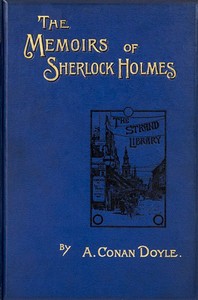
I’ve always found a peculiar quietness between Waverley and The Memoirs of Sherlock Holmes — Reading Companion. Both are catalogued as adventures, yet each keeps a secret hearth — one for a knight’s impossible loyalty, the other for a detective’s private sorrow. They whisper of duties chosen over ease, and I think that kinship is why I shelve them together, for the long evenings.
There are no reviews for this eBook.
There are no comments for this eBook.
Reader reflection
Record your reading impressions
A brief reflection can help important ideas stay with you longer.
Your progress
0
/
10
2
Was reading this book enjoyable?
3
Would you pass this book on to a friend?
4
How much effort did this book require?
5
Would you read this book again?
6
Did this book create an emotional response?
7
Would this book work well in a reading group?
8
How understandable was the text?
9
What changed or sharpened your thinking?
10