
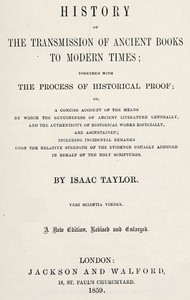
History of the transmission of ancient books to modern times by Isaac Taylor
The Story
Isaac Taylor's book is a detective story, but the mystery is 'How did this get here?' He starts with a simple, huge question: how did the writings of the ancient world—Greek philosophy, Roman history, early Christian texts—survive the 1,500 years between the fall of Rome and the printing press? The plot follows the books themselves. Taylor shows us their perilous journey. They faced the decay of papyrus, the sacking of libraries, political bans, and simple ignorance. The 'action' happens in quiet scriptoriums where monks spent years copying texts by hand, in the bustling markets of the Islamic world where Greek science was preserved and expanded, and in the studies of Renaissance hunters who scoured old monasteries for forgotten treasures. Each chapter is a link in the chain, showing how human curiosity and dedication, against all odds, kept the past's voice from being silenced.
Why You Should Read It
This book changed how I think about reading. Before, I saw an old book as a static object. Now, I see it as a survivor. Taylor makes you appreciate the sheer effort behind every classic. His passion is contagious. He isn't just listing facts; he's telling the dramatic, often lucky, escapes of our shared knowledge. You realize that the copy of Plato's Republic you can pull off a library shelf today exists because of a countless, unbroken line of people who decided it was worth saving. It’s a powerful reminder of our connection to history. It also quietly argues that preserving and sharing knowledge is one of the most important things we do as a society.
Final Verdict
This is a book for the curious. It's perfect for history buffs who love a good 'how-did-that-happen' story, and for any reader who has ever felt a sense of wonder holding an old book. Because it was written in the 1800s, the style is formal in places, but the core story is too gripping to miss. If you enjoy books like The Swerve or podcasts about the history of ideas, you'll find a fascinating, foundational text here. It’s not a light beach read, but it’s a profoundly rewarding one that will make the world feel richer and more connected.
This historical work is free of copyright protections. It serves as a testament to our shared literary heritage.




Emma Jones
1 year agoComprehensive and well-researched.