
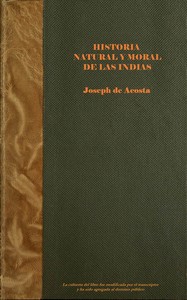
Historia natural y moral de las Indias (vol. 1 of 2) by José de Acosta
Published in 1590, this isn't a novel with a plot, but the story is Acosta's own intellectual journey. The book is his massive attempt to catalog and explain everything in the Americas. Volume 1 focuses on the 'natural' history: the land, climate, and bizarre (to him) wildlife. He describes volcanoes, massive rivers, and strange fruits. He puzzles over the unique animals, like the hummingbird, and tries to figure out how they fit into God's creation. The 'moral' history comes later, examining the cultures, religions, and governments of the Inca and Aztec empires. The central thread is Acosta's relentless curiosity. He observes, asks questions, and sometimes admits he just doesn't have the answers.
Why You Should Read It
This book is special because Acosta is a real observer. Yes, he's a man of his time with all the biases that implies, but he's also strikingly fair-minded. He criticizes the brutality of the Spanish conquest. He respects the engineering of Inca roads and the complexity of Aztec markets. When he sees something that contradicts Aristotle (the ultimate authority for a scholar of his day), he sides with the evidence of his own eyes. Reading it, you witness the birth pangs of modern science and anthropology. You see a person trying to build a bridge between two worlds with the tools he has. His confusion about simple things we take for granted—like why it's hot at the equator—makes you appreciate how much we've learned.
Final Verdict
Perfect for history buffs who want to go beyond dates and battles, and for anyone fascinated by the history of ideas. It's not a light read—the language is old and the scope is huge—but it's incredibly rewarding. If you've ever enjoyed a documentary about explorers or wondered how people in the past made sense of their world, you'll find a kindred spirit in José de Acosta. This is the original source material, written by someone who was there, scratching his head in wonder.
This text is dedicated to the public domain. You can copy, modify, and distribute it freely.



Anthony King
1 year agoNot bad at all.