
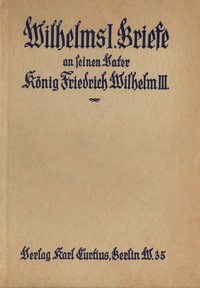
Wilhelms I. Briefe an seinen Vater König Friedrich Wilhelm III. (1827-1839)
This book isn't a novel with a plot in the traditional sense. It's a curated collection of personal letters. The 'story' is the unfolding relationship between a prince and his king, who also happen to be father and son. We follow William, then in his thirties, as he writes home to King Frederick William III of Prussia. The letters cover everything from military maneuvers and political gossip to family news and requests for advice.
The Story
The narrative arc is built through these regular dispatches. We see William reporting on his duties, often seeking validation. He discusses his role in the army, his observations on the shifting political landscape in the German states, and his growing family life. There's no single event driving the story forward, but rather the slow, sometimes painful, process of a son stepping out of a powerful father's shadow. You watch him evolve from a subordinate reporting to his commander-in-chief into a leader developing his own convictions, all while maintaining the formal respect required of the era.
Why You Should Read It
I loved this because it strips away the myth of monarchy. William isn't 'the Emperor' here; he's a guy trying to please his dad. You see his anxiety, his pride, his occasional pettiness. The formal 19th-century language can't hide the universal emotions. It makes you realize that the people who shaped Europe weren't just statues or portraits—they had insecurities and family problems, too. The book also offers a ground-level view of history. You learn about the period not from a historian's summary, but from the casual mentions in a letter: worries about revolution, thoughts on other royal families, the daily grind of governance.
Final Verdict
This is perfect for history buffs who are tired of sweeping narratives and want an intimate, primary-source experience. It's also great for anyone fascinated by family dynamics, especially within the pressure cooker of immense expectation and duty. If you prefer fast-paced action or a traditional biography, this might feel slow. But if you enjoy reading between the lines of personal correspondence and building a portrait of a person piece by piece, you'll find it completely absorbing. It's a quiet, thoughtful look at the man before the monument.
The copyright for this book has expired, making it public property. You can copy, modify, and distribute it freely.
Edward Johnson
6 months agoI started reading out of curiosity and it provides a comprehensive overview perfect for everyone. I would gladly recommend this title.


Richard Perez
1 year agoEnjoyed every page.