
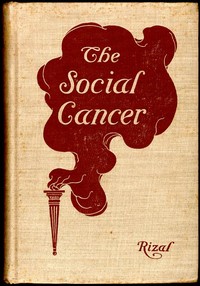
The Social Cancer: A Complete English Version of Noli Me Tangere by José Rizal
If you're looking for a dry history lesson, this isn't it. 'The Social Cancer' is a novel that burns with anger and love for a country. Written by Philippine national hero José Rizal in 1887, it was so explosive that it helped spark a revolution.
The Story
We meet Crisóstomo Ibarra, a privileged and idealistic young man who comes back to Manila after years abroad. He dreams of building a school and helping his people. But his homecoming is shattered. He learns his father, Don Rafael, died in prison after a feud with a cruel friar, Father Dámaso. Ibarra reconnects with his childhood sweetheart, María Clara, but their romance is immediately threatened by the same powerful forces that destroyed his father.
As Ibarra digs into the past, he sees the Philippines not as a peaceful colony, but as a sick society. The Spanish friars control everything—land, education, even people's souls—while the Spanish officials are either corrupt or powerless. Ibarra's journey from a hopeful reformer to a man targeted by the entire system is tense and tragic. The book is packed with unforgettable characters, from the vicious Father Salví to the mysterious rebel Elias, who shows Ibarra the brutal reality outside his privileged world.
Why You Should Read It
First, it's a masterclass in political storytelling. Rizal doesn't just rant; he shows you the cancer through vivid, sometimes painful scenes. You'll feel the humiliation of a town forced to obey a petty friar and the despair of characters with no way out. Second, María Clara is far more than a love interest. Her trapped existence, caught between her heart, her family, and the church, is one of the book's most powerful critiques.
Most importantly, it reads like a warning that echoes today. It's about what happens when truth is silenced, when faith is weaponized, and when good people are broken by a system designed to keep them down. It's not an easy read—it will make you furious and sad—but it's a necessary one.
Final Verdict
This book is perfect for readers who love historical fiction with a sharp political edge, like 'Les Misérables' or 'A Tale of Two Cities.' It's also essential for anyone curious about Southeast Asian history and the roots of colonialism's damage. If you enjoy stories where the personal and political collide with devastating force, you need to meet Crisóstomo Ibarra. Just be prepared—this story sticks with you long after the last page.
No rights are reserved for this publication. It serves as a testament to our shared literary heritage.
Jennifer Martin
2 years agoBeautifully written.



Michelle Lewis
5 months agoI was skeptical at first, but the emotional weight of the story is balanced perfectly. One of the best books I've read this year.