
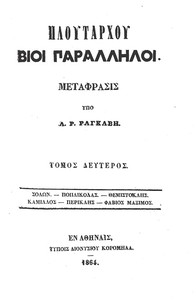
Πλουτάρχου Βίοι Παράλληλοι - Τόμος 2 by Plutarch
Plutarch's Parallel Lives isn't a single story with a plot in the modern sense. Think of it as a brilliant, ancient concept for a biography series. In this second volume, Plutarch continues his project of pairing a famous Greek with a famous Roman whose lives and careers he finds comparable. He writes a biography for each, and then finishes with a short essay directly comparing them.
The Story
You'll dive deep into the complete lives of figures like Alexander the Great and Julius Caesar, or perhaps Demosthenes and Cicero. Plutarch walks you through their origins, their rise to power, their major victories and crushing defeats, all the way to their deaths. But he's far more interested in their character than a simple timeline of events. He fills the narratives with revealing anecdotes—small moments that show a man's bravery, his temper, his generosity, or his hypocrisy. The 'plot' is the unfolding of a destiny shaped by personal choices. The central conflict in every life is internal as much as external: the struggle between a leader's virtues and his vices, and how that battle decides the fate of nations.
Why You Should Read It
I love this book because it treats historical figures as real, complicated people, not marble statues. Reading about Alexander's incredible drive alongside his moments of drunken rage makes his achievements feel human, not mythical. Plutarch has a novelist's eye for detail. He wants you to understand why things happened, not just what happened. The parallel structure is genius. Seeing how similar challenges played out for a Greek and a Roman invites you to think about universal truths of leadership, ambition, and morality. It’s less about memorizing facts and more about understanding character, which is why it feels so relevant even now.
Final Verdict
This is perfect for anyone who enjoys deep-dive biographies, political history, or timeless stories about power and personality. If you liked books like Lives of the Caesars or modern biographies that focus on psychology, you'll feel right at home here. It's also great for readers who might find straight history a bit dry; Plutarch's anecdotal style is engaging and personal. Be prepared for a thoughtful, character-driven journey into the ancient world that will likely make you reflect on our own leaders today.
This digital edition is based on a public domain text. Distribute this work to help spread literacy.








Deborah Miller
10 months agoPerfect.